How to Clean an Italian Charm Bracelet at Home
To clean an Italian charm bracelet, wipe it with a soft cloth, swish it for a few minutes in warm water with a drop of mild dish soap, brush the links gently with a soft toothbrush, rinse, then dry every link completely before you wear it again. That is all most bracelets ever need. Below are the steps in detail, what to do differently for gold tone, enamel and crystal charms, what to keep away from your bracelet, and the questions people ask most.
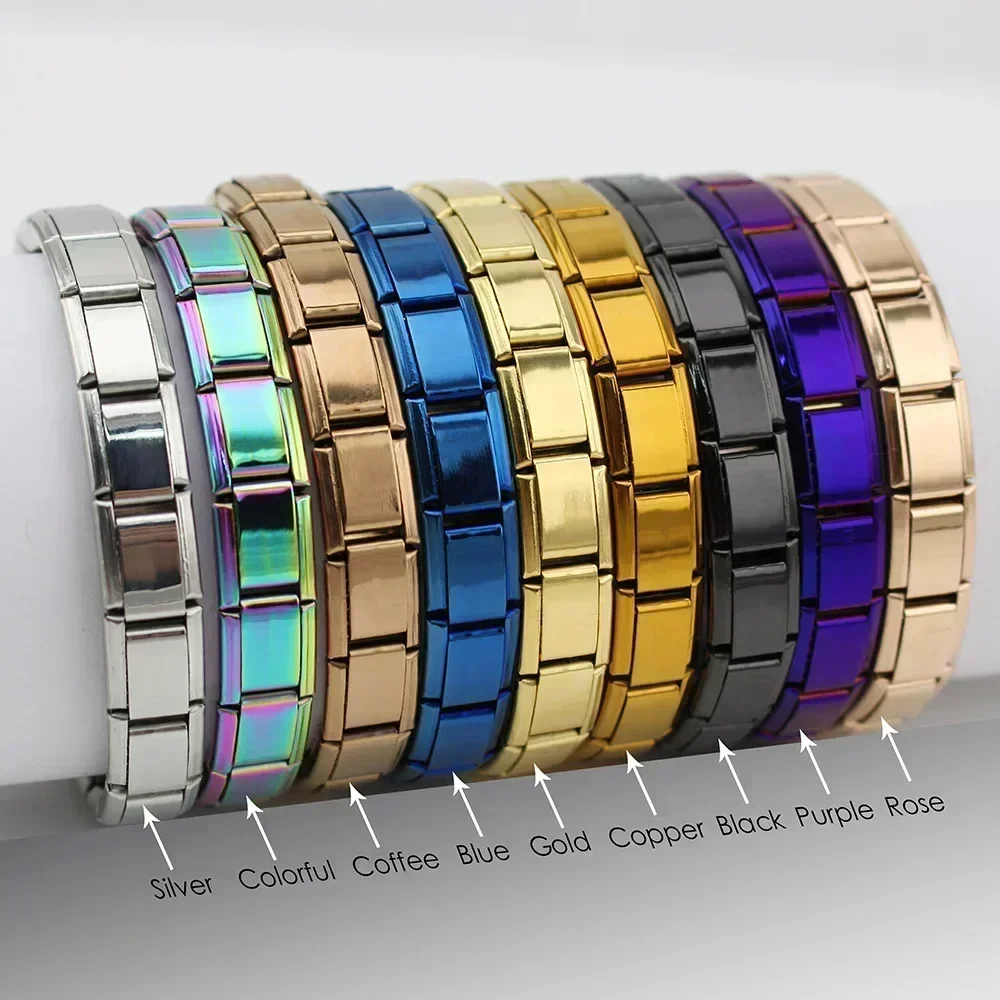
What you need
- A small bowl of warm water
- A drop of mild dish soap (no bleach, no ammonia)
- A soft toothbrush you only use for jewelry
- Two soft, lint free cloths: one to wipe, one to dry
Our bracelets and charms are made of stainless steel, and stainless steel is easy to look after. Jewelers Mutual, a US jewelry insurer, recommends exactly this kit for stainless steel jewelry: warm water, mild soap and a soft cloth, with a soft bristled toothbrush for stubborn spots. (Source: Jewelers Mutual, how to clean stainless steel jewelry.)
How to clean an Italian charm bracelet, step by step
- Wipe it first. Run a dry soft cloth over the links to lift loose dust and grit, so you do not rub it into the metal while you wash.
- Make a mild soapy bath. Mix a drop of mild dish soap into a bowl of warm water.
- Soak for a few minutes only. Let the bracelet sit in the water for two or three minutes. Do not leave it overnight: long soaks are what you want to avoid with any steel or plated jewelry.
- Brush gently. Use the soft toothbrush on the front of each charm and along the sides of the links, where lotion and skin oils collect.
- Rinse. Rinse under lukewarm water so no soap film is left in the gaps.
- Dry every link. Pat it dry with the second cloth straight away, then lay it flat on a dry towel for an hour. Each link has a small spring inside, and drying the bracelet fully means no water sits around those springs.
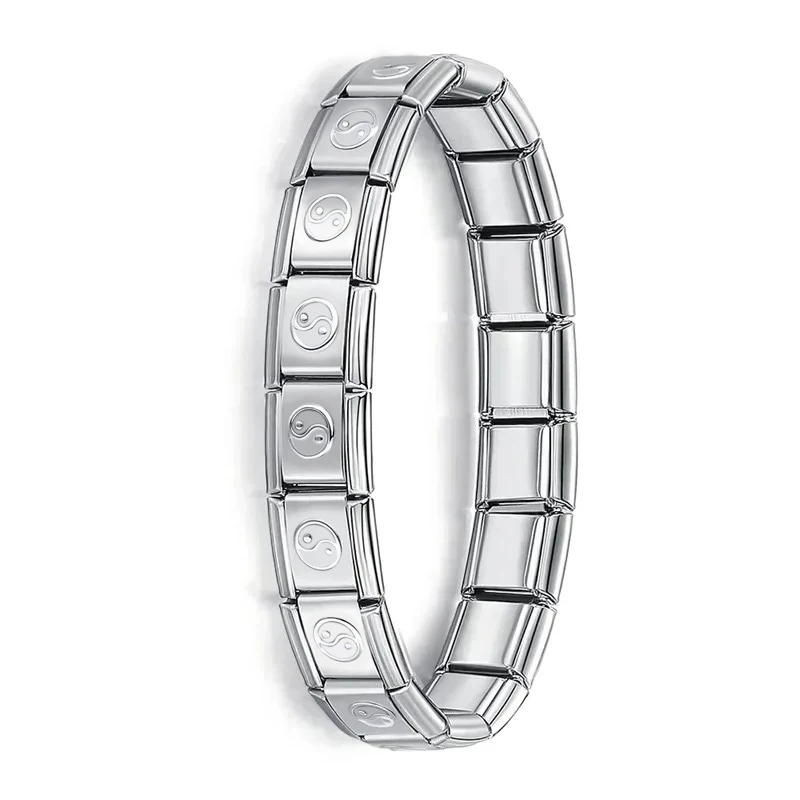
Should you take the links apart to clean it?
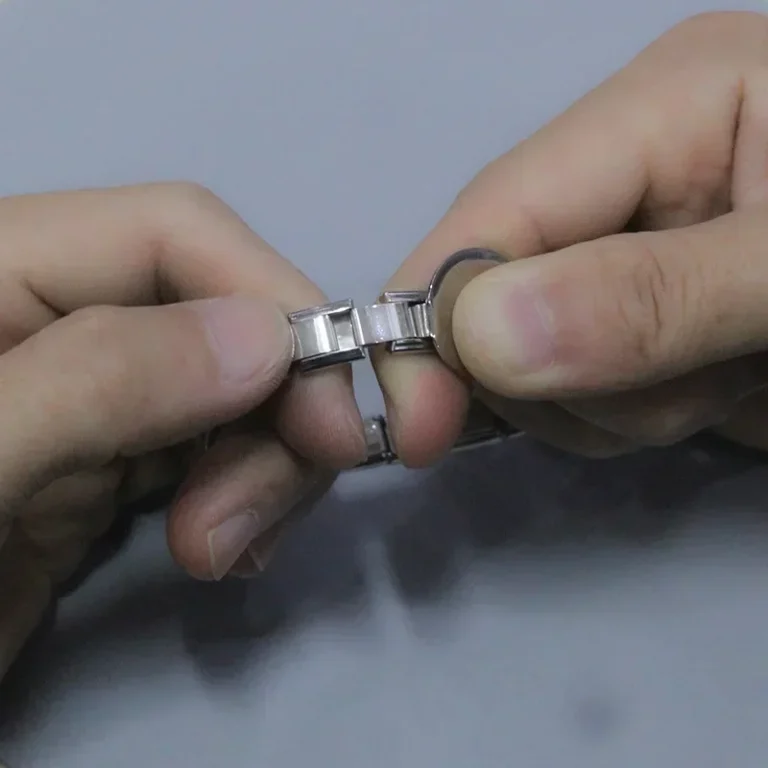
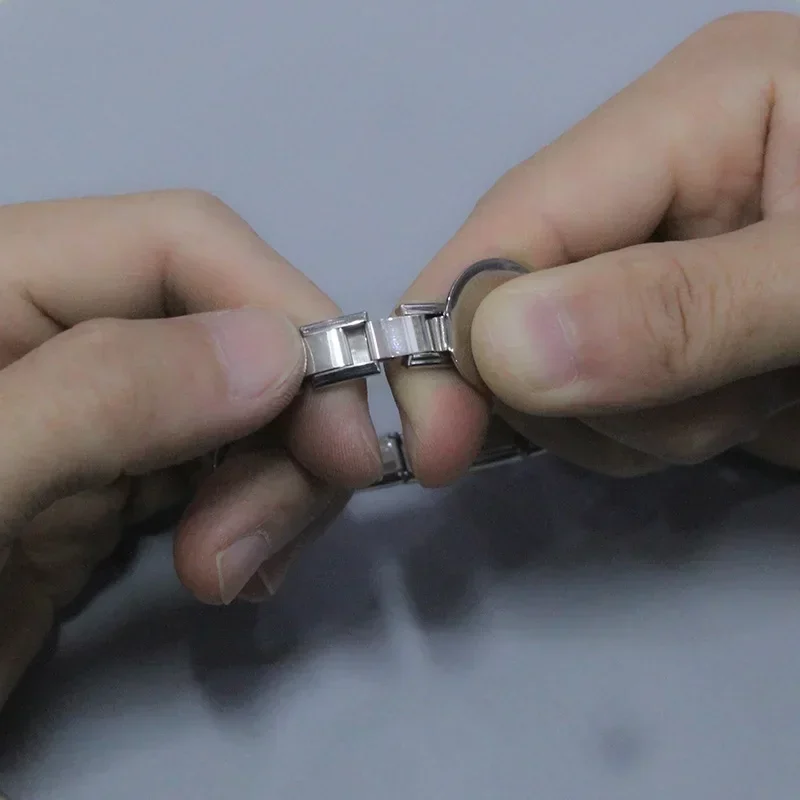
You do not have to. For a normal clean, wash the bracelet in one piece. If a charm has visible grime packed along its edges, you can take that link out, clean it on its own and click it back in. Our guide on how to add and remove links shows how, and the opening tool makes it easier on your nails.
Gold tone and rose gold tone links
Gold and rose gold links are stainless steel with a gold colored finish on top, not solid gold, so they need the softest touch of all. Jewelers Mutual advises against abrasive materials and harsh chemicals on gold plated jewelry, and lists baking soda, vinegar, hot water and hydrogen peroxide as home remedies that can damage the plating. (Source: Jewelers Mutual, how to clean gold plated jewelry.)
So for gold tone links: the same mild soap and warm water, a lighter hand with the toothbrush, and no scrubbing powders or polishes. Between washes, a quick wipe with a soft dry cloth keeps the shine.
Enamel, crystal and dangle charms
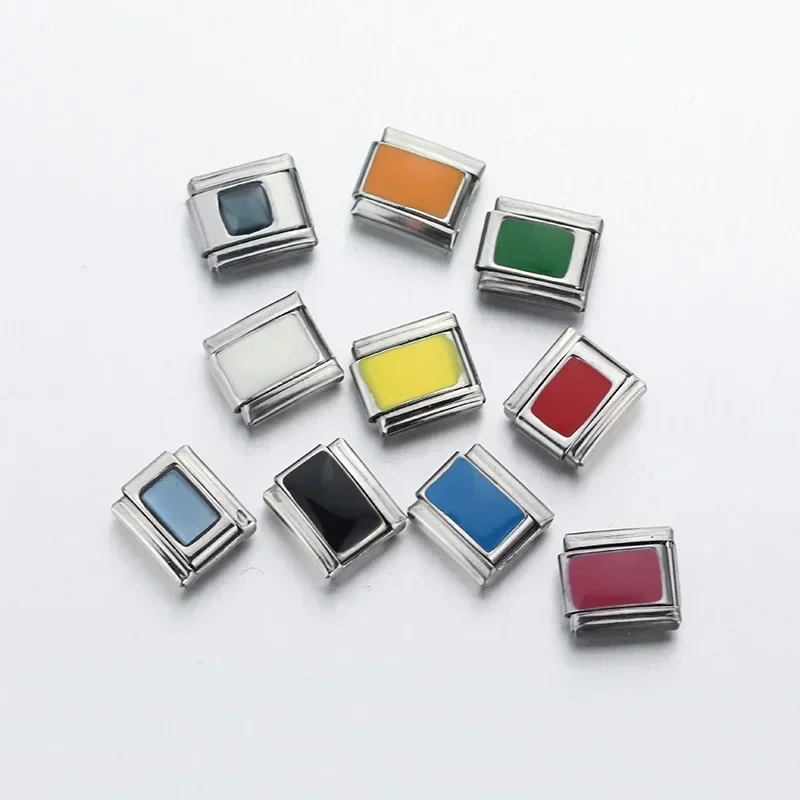
- Enamel charms (the colored picture charms): brush across the face lightly. Never pick at the enamel with a pin or anything sharp.
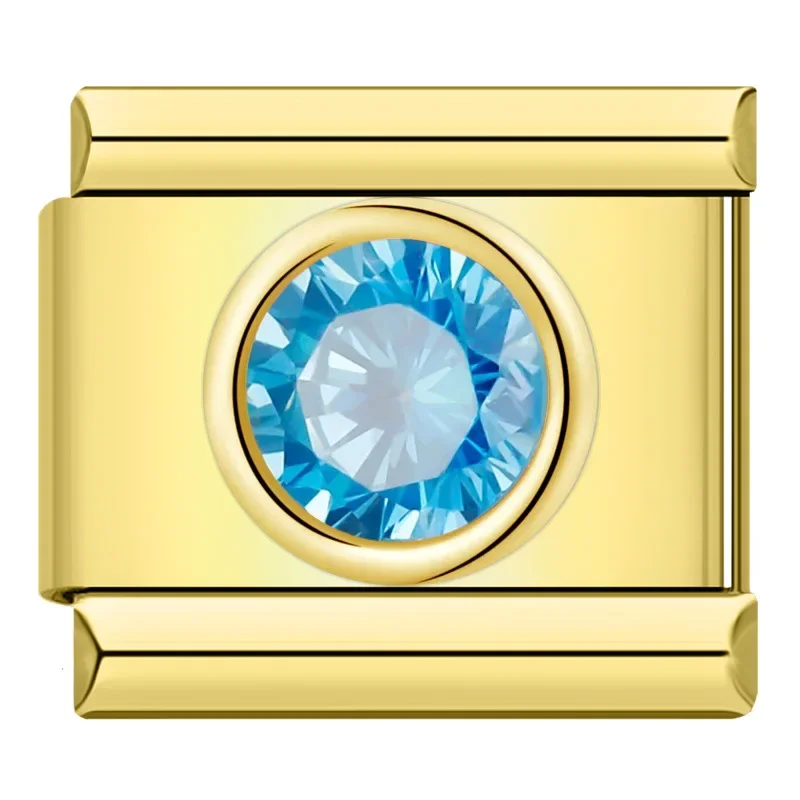
- Crystal and birthstone charms: brush around the setting, not hard against the stone, and skip ultrasonic cleaners. Jewelers Mutual warns that over soaking and ultrasonic cleaners can damage delicate stones.
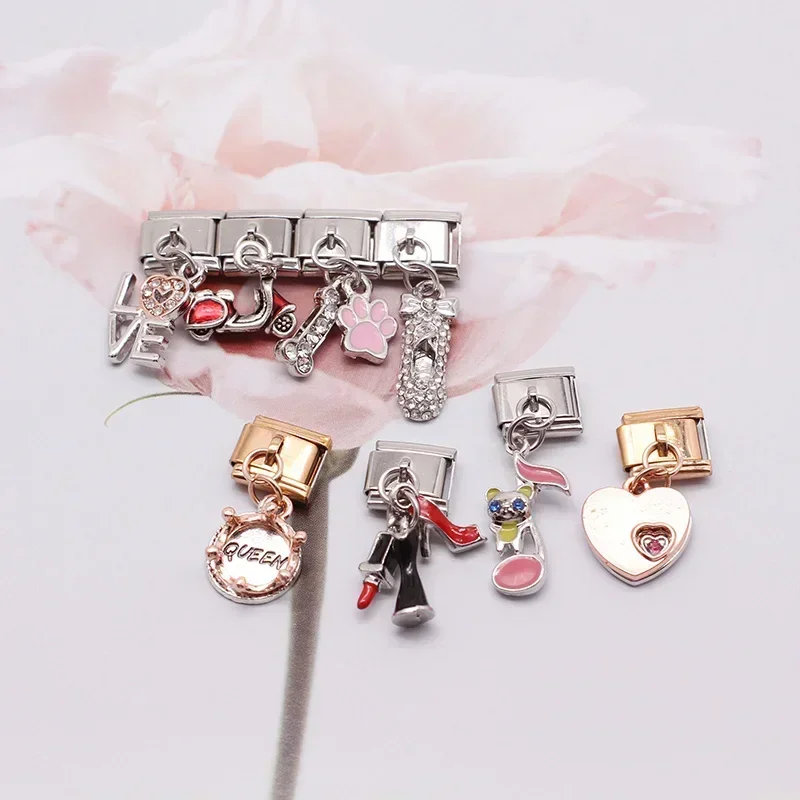
- Dangle charms: hold the little hanging piece still while you brush, so the jump ring is not bent back and forth.
What to keep away from your bracelet
- Chlorine and bleach. Take the bracelet off for pools, hot tubs and cleaning with household products. Jewelers Mutual names chlorine, bleach and some cleaning products as chemicals that damage both stainless steel and gold plating.
- Long time in water. Stainless steel resists water, but the same source says long exposure can leave water spots and mineral build up, and suggests taking jewelry off to shower, swim or wash dishes.
- Abrasives. Toothpaste, scouring pads and baking soda pastes can scratch shiny links and wear gold tone finishes.
- Perfume, hairspray and hand cream. Put them on first and let them dry, then put your bracelet on.
How to store it
Keep your bracelet somewhere cool and dry, out of direct sunlight, in a soft pouch or a fabric lined box, and away from other jewelry so the links do not scratch each other. That advice comes from the same Jewelers Mutual guides, and it suits Italian charm bracelets well because the flat links scuff when they knock against harder pieces.
How often should you clean it?
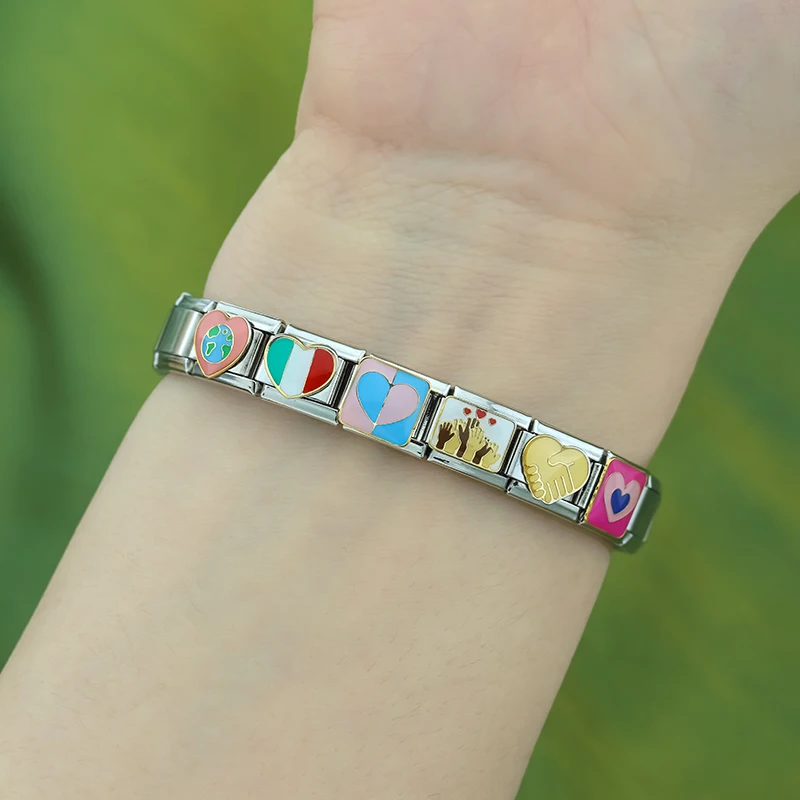
If you wear your bracelet every day, a quick wipe with a dry cloth each week and a soapy wash every few weeks is plenty. Jewelers Mutual suggests cleaning stainless steel jewelry every few weeks, or whenever it looks dull or you can see build up.
Building or refreshing your bracelet?
A clean bracelet is also a good moment to change the story it tells. Swap in new enamel color links, a gold birthstone charm or a pair of two tone heart charms, or start fresh with a 9 mm stainless steel base. Not sure about size? Read our size guide, and see how gold and silver links mix in our metals guide. Until 1 December, every bracelet comes with a free charm you pick in your bag: see the Black Friday picks.
Questions people ask
Can you shower with an Italian charm bracelet on?
It is better not to. Stainless steel resists water, but regular showers leave soap film and water spots, and water can sit around the springs inside the links. Take it off to shower and swim, and dry it fully if it does get wet.
Do Italian charm bracelets tarnish?
Stainless steel resists rust and tarnish well, so silver tone links keep their look with simple care. Gold and rose gold tone finishes can wear over time, especially with chlorine, perfume or rough cleaning, so treat those links gently.
Can I clean my bracelet with baking soda or vinegar?
Skip them, especially on gold tone links. Jewelers Mutual lists baking soda, vinegar and hydrogen peroxide among home remedies that can damage gold plating. Mild dish soap and warm water are enough.
What is another name for an Italian charm bracelet?
You will also see them called Italian link bracelets, modular charm bracelets or 9 mm charm bracelets. They all mean the same style: flat links joined by small springs, where any link can be swapped for a charm.